Storage tank, which one to choose?
AirProof — heating & ventilation specialists
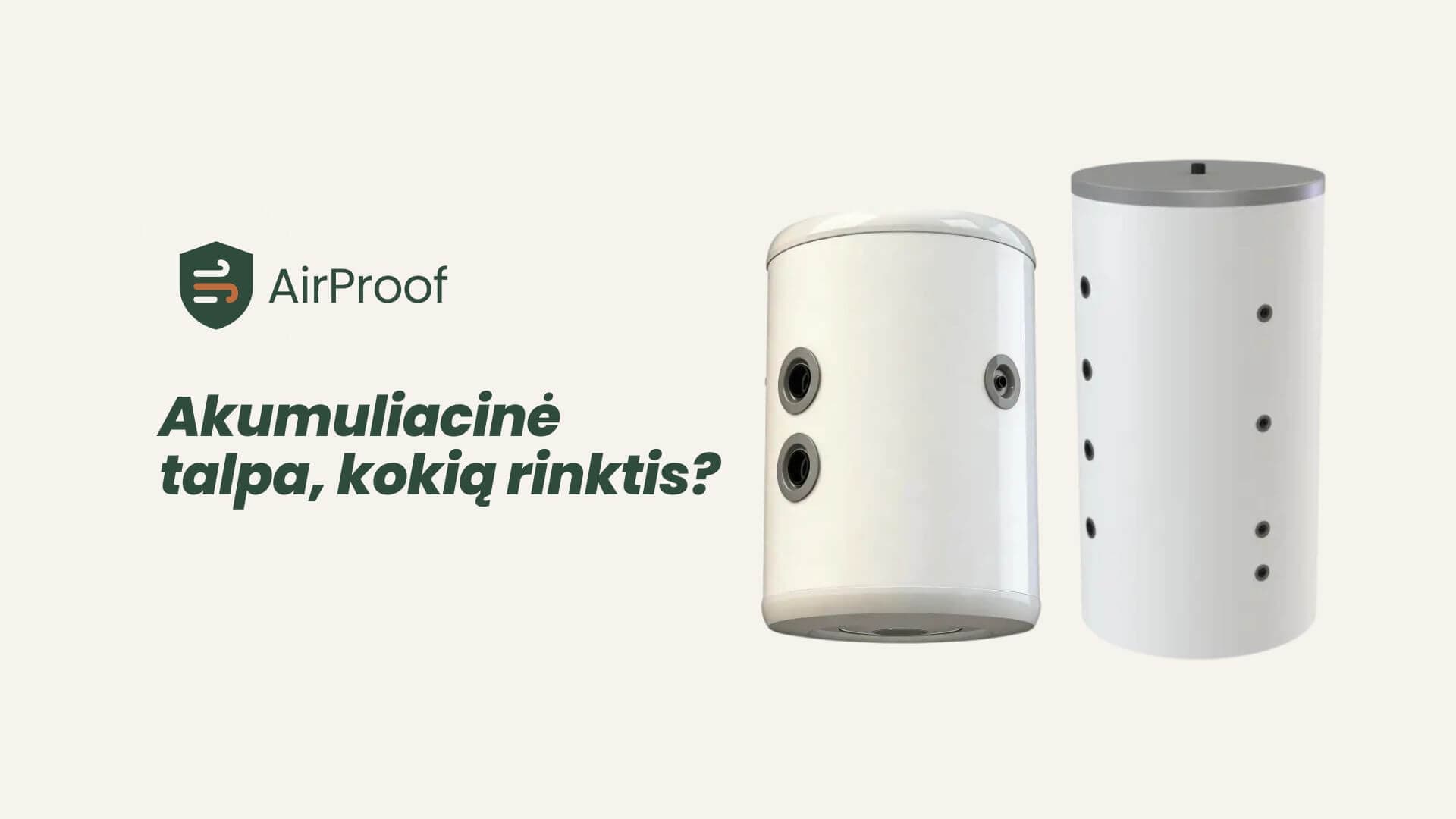
Accumulation Tank, Which One to Choose?
The efficiency of a heating system directly depends on correctly selected components. In addressing microclimate challenges, Accumulation tanks play a particularly important role. These devices effectively store heating water, so the heat pump operates more evenly and much more economically. The system experiences fewer start-ups, which guarantees significantly longer equipment service life. The equipment is widely used together with heat pumps, solid fuel boilers, or even modern solar collectors. In a wide range, reliable manufacturer products stand out. You can find more useful information about other NØRDIS products on the official manufacturer's representative page.
Main Advantages of a Buffer Tank
The tank in the system acts as a kind of heat buffer. It absorbs excess energy and releases it only when the premises need it most.
- Even operation is achieved by drastically reducing the number of compressor starts.
- Durability is ensured by less wear on mechanical and moving parts.
- Compatibility allows the system to be hybridized and combine different heat sources.
NØRDIS Tank Models Overview
The manufacturer offers devices of different volumes, adapted to the most varied needs. The smallest model NBT-30SW holds 27 liters of water and costs 376 euros. This is an extremely compact solution for limited spaces and small homes. The slightly larger NBT-60SW model stands out with a 60-liter volume, and its price reaches 445 euros. Both these options are ideal for stabilizing lower power systems and ensuring the required flow.
For larger buildings or more complex engineering systems, the manufacturer offers more capacious models. The NBT-100SF device holds 105 liters and costs 570 euros. For maximum heat storage needs, the NBT-500SF model was created. This engineering giant holds up to 498 liters of water. Its price is 1200 euros. This is an unparalleled choice for combined heating systems.
Comparison of Technical Parameters and Prices
Below we provide a detailed table to help you quickly evaluate the capabilities of different models and investment amounts.
| Model Name | Water Volume (l) | Primary Function | Price (€) |
|---|---|---|---|
| NØRDIS NBT-30SW | 27 | System uniformity assurance | 376 |
| NØRDIS NBT-60SW | 60 | System uniformity assurance | 445 |
| NØRDIS NBT-100SF | 105 | Heat storage and pump protection | 570 |
| NØRDIS NBT-500SF | 498 | Large energy quantity storage | 1200 |
Selecting the Optimal Size According to Need
Every building is unique. The tank size must be selected taking into account the specifics of the heat source and the building's engineering solutions.
| Tank Size | Recommended Purpose | Value Created |
|---|---|---|
| From 27 to 60 liters | For new construction homes with floor heating | Ensures minimum required flow for device defrosting |
| Approximately 105 liters | For medium-sized buildings with mixed heating systems | Effectively reduces the number of compressor start and stop cycles |
| Nearly 500 liters | For large homes with boilers or solar collectors | Accumulates a massive heat reserve for later use |
Frequently Asked Questions
Is an accumulation tank necessary when installing a heat pump?
Although some very specific systems can theoretically operate without it, tank use is strictly recommended. It protects the most expensive part of the pump, the compressor, from frequent cycling and ensures a completely smooth defrosting process in winter.
How do small and large accumulators differ in their operating principle?
The operating principle is completely identical. Only the amount of accumulated energy differs. Small models serve more as a system hydraulic vessel for controlling flows, while large models act as a real heat bank.